
Toys diverging
Analog play thrives as the digital divide widens

Whenever I travel anywhere new, I make it a point to buy a set of Warhammer 40K figurines.
I’m tired of buying mugs and was never one for shot glasses. Figurines, on the other hand, are lightweight souvenirs that I will enjoy assembling and painting at some later point, to remember whatever trip I was on at the time.
It’s also a great motivator to leave your hotel room between meetings and head to some unrelated part of town. I’m a seasoned and spoiled traveler. But that lobby life has limits.
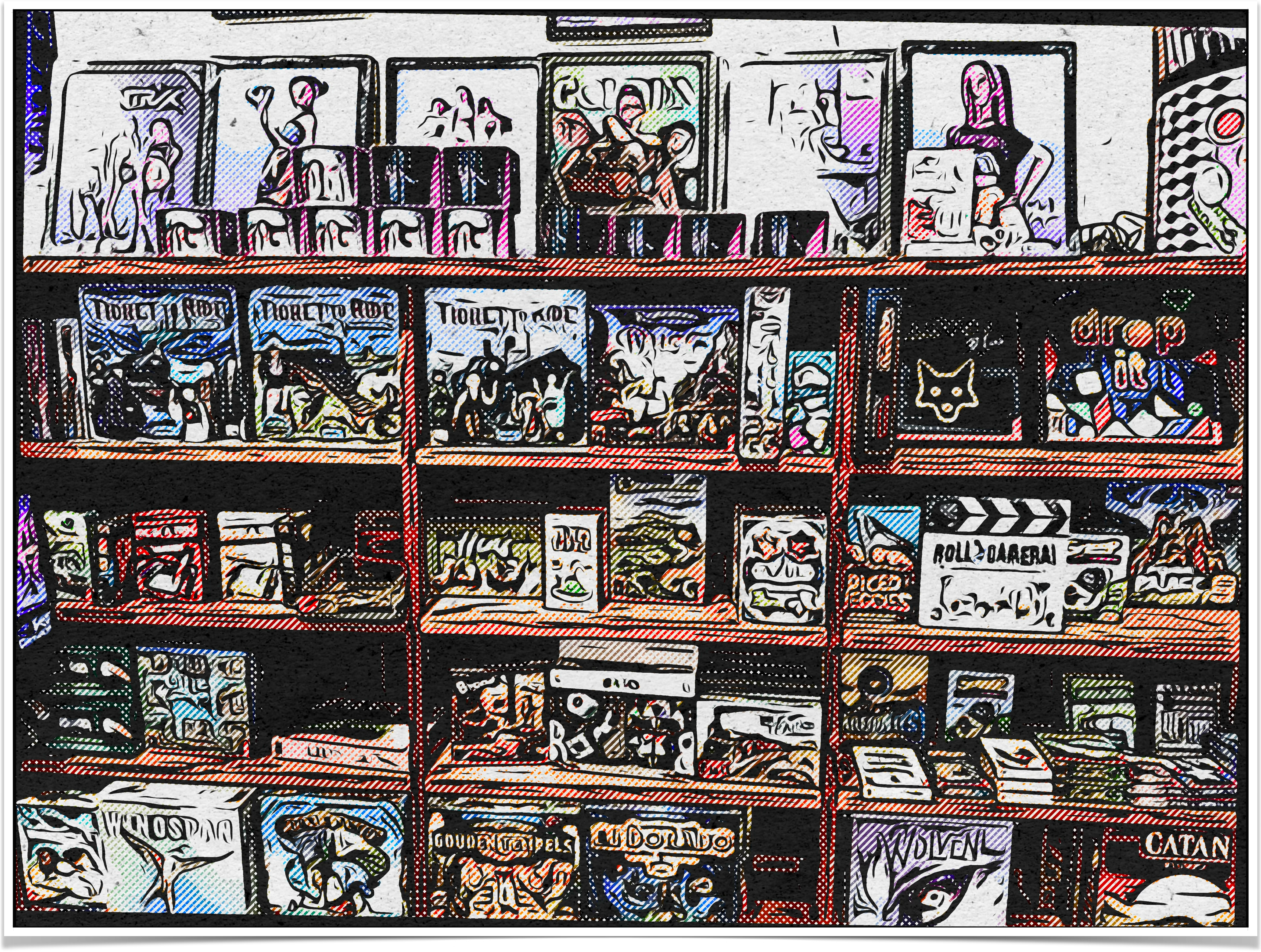
Anyway, along these lines, I found myself in a board game store during a recent trip to the Netherlands. There’s something quaint and deeply relaxing about standing in front of a wall of board games and related paraphernalia.
Given how prominent digital play has become, you’d think that this odd form of analog, offline play is a relic.
It is not.
Today, the global tabletop games industry is a consumer entertainment category valued between $16.8 and $24.9 billion, fueled in part by what researchers have called 'digital fatigue' and a growing preference for nondigital forms of entertainment. It is a growing market, brimming with innovation and perhaps a place for civic engagement.
Just last week, we saw the incredible success of a Kickstarter campaign for the Cyberpunk 2077 trading card game, raising $28 million. People vote with their money. I’d be curious to see which other AAA publisher would dare expose its IP to the raw reality of a consumer-facing investment market.
Board and trading card games are also an incredible source of strategic innovation. Interactive entertainment at large is so deeply tethered to the tech industry’s idea of positive network effects that we’ve completely forgotten to challenge any of those assumptions. It is something as modest as analog cardboard-based play that unnerves the incessant addition of social features as “wholly advantageous” and proves they are not “unequivocally beneficial.”
But my favorite feature is how these games, perhaps because they do not require a $3,000 to $4,000 NVIDIA RTX 5090 graphics card, serve as a way for people to connect.
In a 2020 study on Saudi card game players, researchers found that participants consistently valued board games for their ‘low-tech, natural community-building properties’—preferring the face-to-face negotiation of a shared table over the convenience of a screen.
Saudi designers used locally made games to express national identity, and board game cafés became gathering spaces where social norms were negotiated in person—especially in a country undergoing rapid modernization under Vision 2030, where the analog game table became a site of cultural self-definition rather than a retreat from progress.
Offline play might be my next move.
On to this week’s update.
BIG READ: Toys diverging
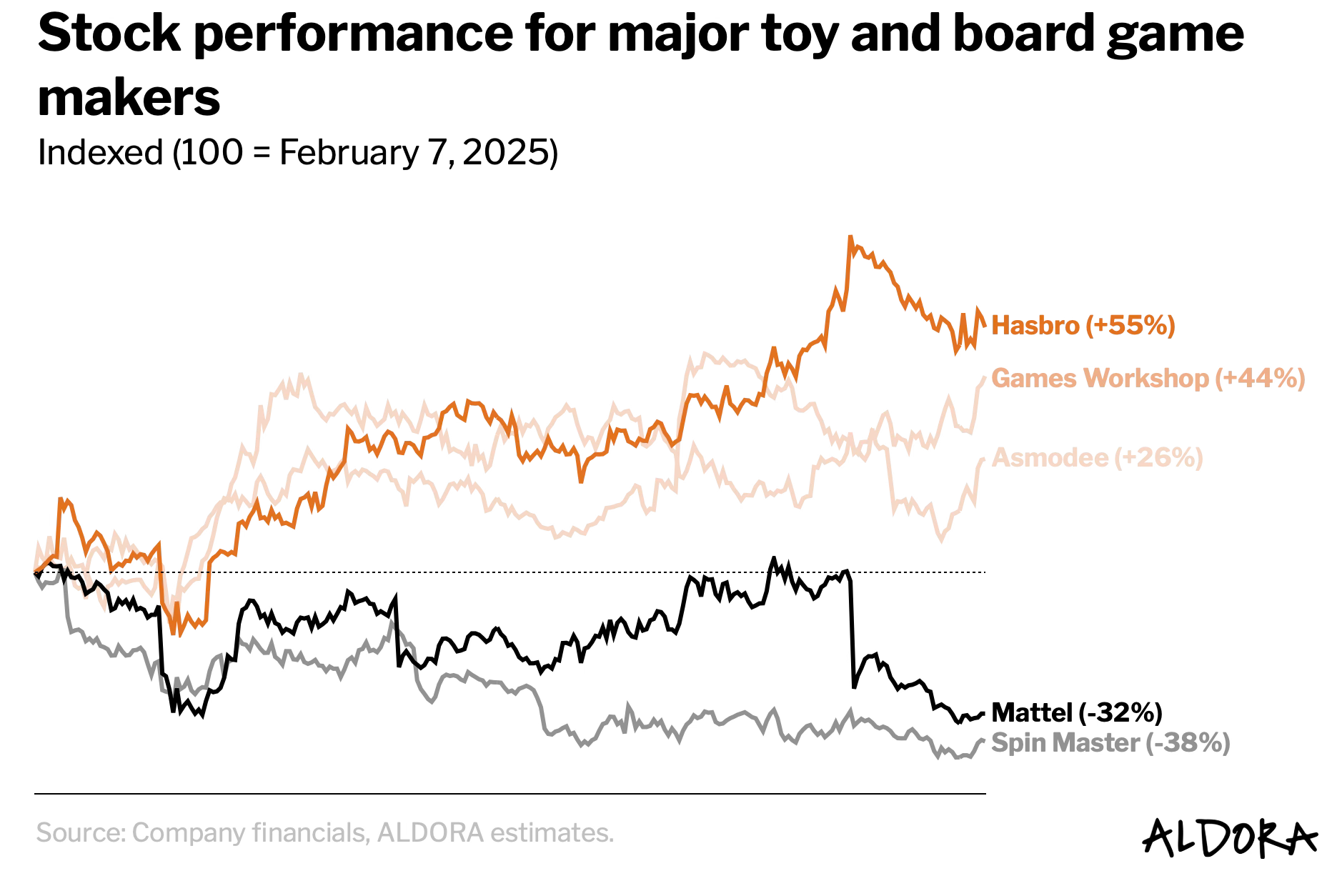
Since Asmodee's IPO in February 2025, the first moment all major toy and entertainment companies were publicly traded simultaneously, the market has delivered a clear split.
Firms that have successfully established a secondary, high-margin revenue engine alongside their physical business are doing well. This includes Hasbro (+55 percent), Games Workshop (+44 percent), and Asmodee (+26 percent). In contrast, competitors that haven’t quite formulated such a strategy, like Mattel (-32 percent) and Spin Master (-38 percent), are down.
The companies that are struggling aren't struggling because digital isn't working. They're struggling because they're still monetizing their biggest brands through one channel at a time. Hasbro, for instance, figured out how to make Magic: the Gathering pay across physical cards, digital games, licensing, and community all at once. It has defined its metagame strategy while competitors are still formulating theirs.
An integrated approach pays dividends. Wizards, Hasbro’s games division, generated $2.2 billion in 2025 (up 45 percent year-over-year) at a 46 percent margin. Its best-known franchises are performing well: Magic: The Gathering alone grew 59 percent, and Monopoly Go! added $168 million in licensing revenue. Interactive entertainment accounts for almost half of Hasbro’s total revenue and the vast majority of its profit.
