

Matt Ball gets a job
Xbox fields a new star player

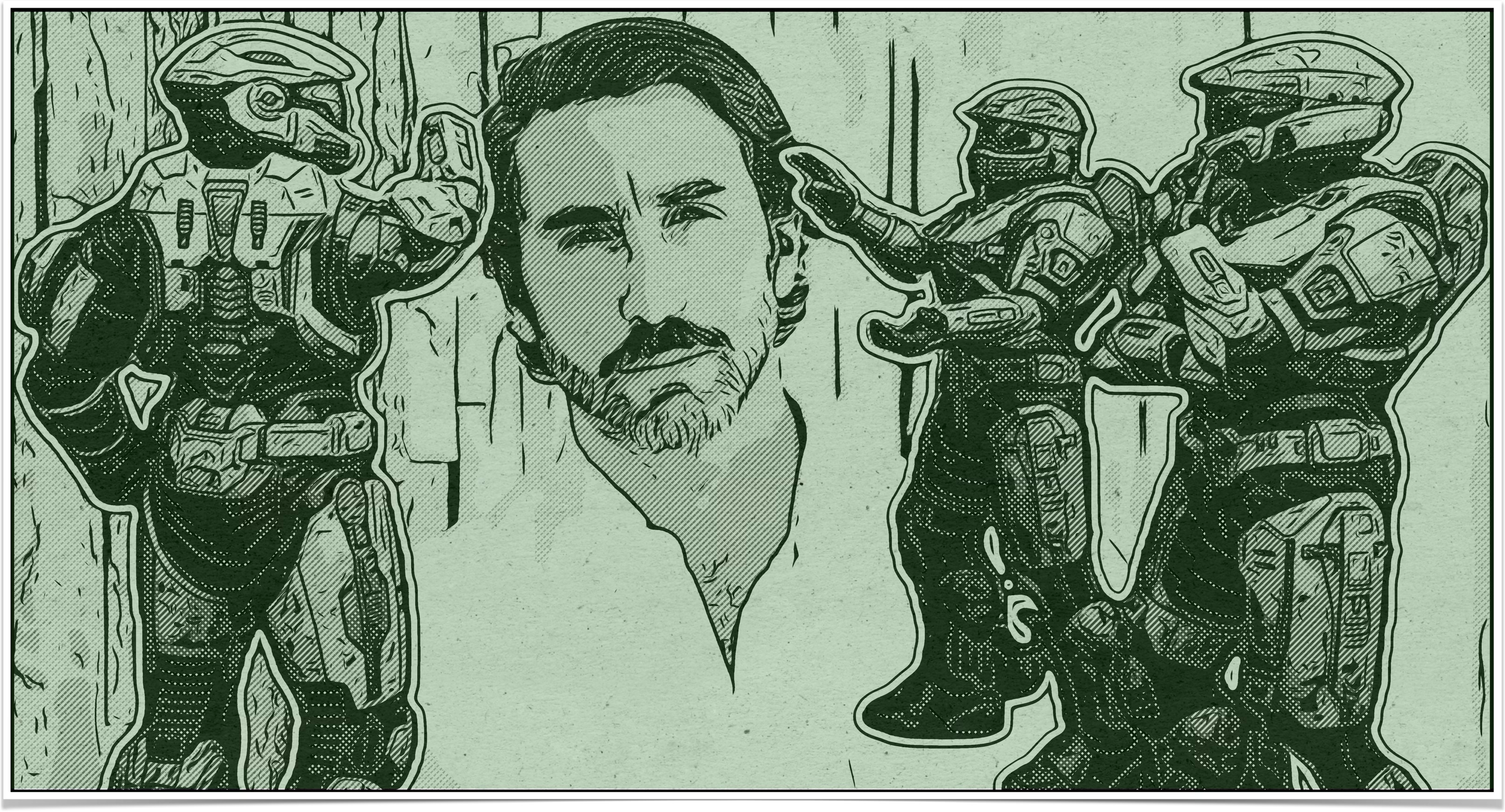
Judging by the number of text messages I’ve received, the second-biggest news to come out of Xbox this year was last Wednesday’s announcement of Matthew Ball as its brand-new Chief Strategy Officer.
His high-calorie slide decks, his book on the metaverse, and a steady stream of long-form essays have made Ball the most-cited analyst in the industry, and I’m glad he’s getting a chance to put his ideas into practice at scale.
I also commend Asha’s willingness to shuffle the team and take a different direction. Just three months in, she’s already changed the narrative around Xbox’s future. She lowered the price of the premium Game Pass tier and issued a memo that echoed the spirit of the old Xbox. Both Xbox and the industry desperately need to evolve, and so far, Asha is proving to be an agent of change.
Ball is the exclamation mark on a string of hires that began with several execs from her old CoreAI crew. It is entirely too early to speculate what’s going to happen next, especially because I don’t think that Asha hired him with a specific agenda in mind. But I’d expect him to follow his instincts and build on some of the major trends he’s outlined in the past. For Xbox, that may entail doubling down on user-generated content. Ball has long held a strong affinity for Roblox and comparable digital experiences. Building a healthy third-party ecosystem in which individuals and small studios can bring novel experiences to market seems likely.
So far, I’m liking the new Xbox. The real test is whether one of the industry’s most prescient strategists, who built his name on charting the industry’s course, can actually move it there.
NEWS
Take-Two schooling investors during earnings
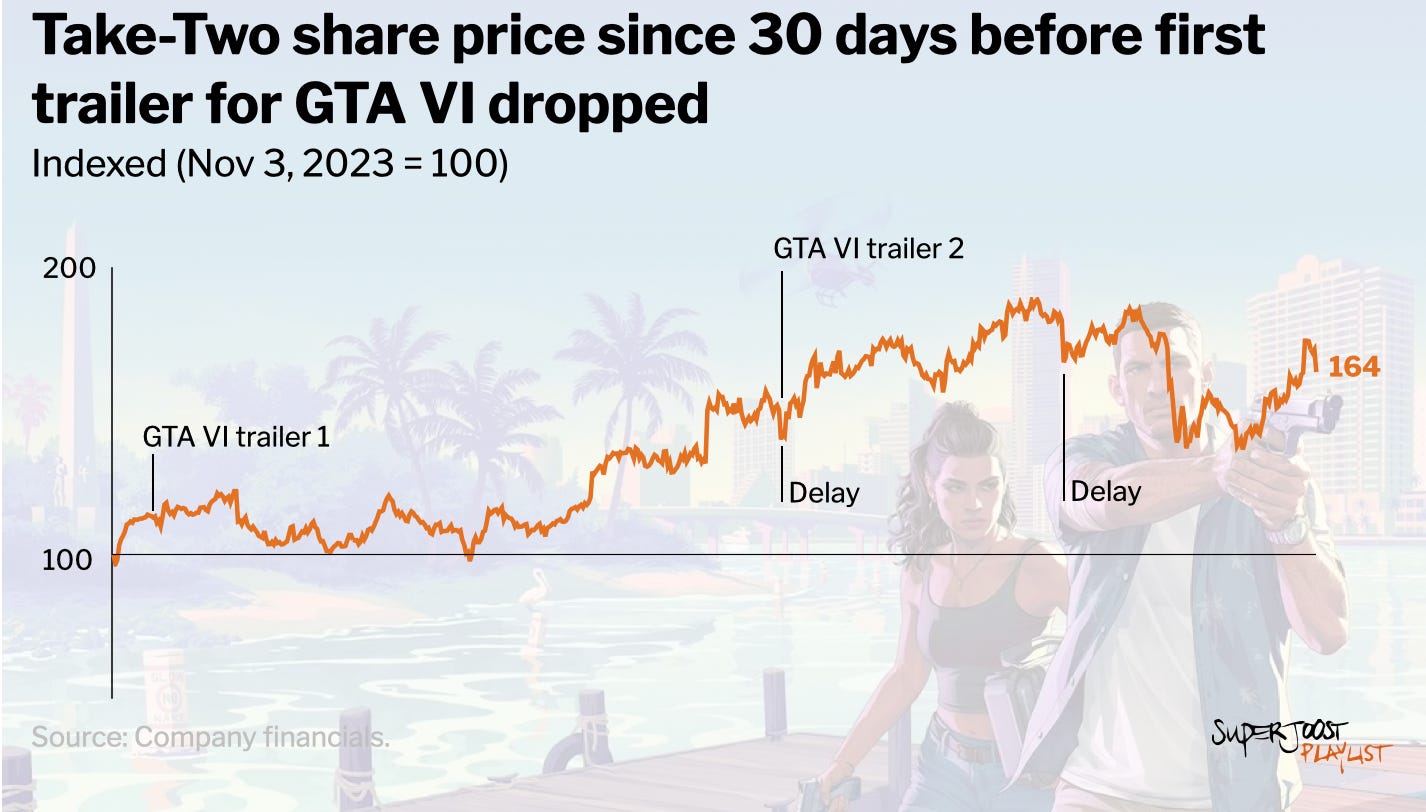
The idea that someone as bulletproof as Strauss Zelnick would just give you, a shareholder, the information you so desperately want is hilarious. He doesn’t work for you. During earnings last Thursday, Zelnick seemingly frustrated investors and, by extension, gamers, by saying words other than “Yes, GTA VI is going to launch on November 19 as planned,” and “It will cost $80.”
Instead, we got a masterclass on being an entertainment executive.
Zelnick’s job is to make sure he’s got the best possible people working on the biggest possible project that yields the greatest possible return. He knows he has a monster hit on his hands and is therefore doing the fiscally responsible thing by tempering expectations.
In case of any disappointment, it contains downside risk, and in case of a blowout success, the firm looks even better. In addition, while the GTA VI release is material to Take-Two’s success, the firm is more than a single franchise and has been diversifying its offerings across all platforms and categories. Investors tend to look for short-term gains, while successful entertainment empires focus on consistency.
Does that mean it will or won’t launch on November 19th?
Well, now that we’re six months out from GTA VI’s release, I take this earnings cycle as the firm’s last chance to announce drastic, additional 6- to 12-month delays. We may still have to wait a few extra weeks past the current date, but Take-Two is not going to miss the holiday season.
Its predecessor, GTA V, sold $1 billion within its first three days. I predict that GTA VI will sell $1 billion in its first 24 hours and 38 million copies within its first year, even before its release on PC. Historically, Take-Two’s blockbuster releases have consistently outperformed expectations because, well, they prove to be so popular that it is difficult to accurately predict even the most optimistic scenario.
What did you think the word ‘Grand’ meant here exactly?
The emergence of a new data monopoly
Last week, Sensor Tower announced that it had acquired AppMagic, another smaller mobile market intelligence provider. The reasoning is that AM will serve as Sensor Tower’s “new small and medium-sized business (SMB) offering.”
Having built and sold several data companies myself, I have at least three thoughts.
First, flowers are due. I’m happy for AppMagic’s founder and CEO, Max Samorukov. From the start, the quality of his data was on par with Sensor Tower’s and, importantly, cheaper. When I first met him a few years ago, I got to know him as incredibly sincere in his efforts and work ethic. It’s a great outcome for a great operator.
Second, acquisitions rarely occur in a vacuum. Beyond comparatively smaller deals like AppMagic, private equity is looking to buy and roll up several data providers across the measurement layer. My tea leaves tell me that sooner or later, a firm like AppLovin or AppsFlyer is going to look to scoop up Sensor Tower.
Sensor Tower generated $48 million in 2025, up from $17 million a year earlier. According to CEO Oren Kaniel, AppsFlyer is generating $500 million in annual recurring revenue as of early 2026. Reportedly, the firm is valued at around $2 billion. Combining the two halves of competitive intelligence and marketing campaign measurement would effectively create a Nielsen-style organization for the mobile app ecosystem.
Third, all this makes me increasingly skeptical of continued consolidation among mobile data providers. After absorbing data.ai in 2024 and VG Insights in 2025, Sensor Tower has been bulking up through expansions. That’s fine, of course.
In the data business, each acquisition removes another independent data source from the market, and the cumulative effect creates a structural barrier to entry. It means that only well-capitalized firms can credibly compete, and increasingly, only mobile studios that have mastered the user-acquisition algorithm have a real shot at success.
You can see this in the DNA of today’s winning mobile studios. We spend a lot of time talking about consolidation among publishers and platforms because, on average, economies of scale tend to disincentivize innovation and creative risk-taking. It reduces the number of voices in creative markets.
A highly concentrated data market deserves the same degree of scrutiny, because it, too, throttles creativity and the free flow of ideas at the supply side.
My prediction is a further rollup in this category, especially as private equity seizes the opportunity to build a mobile data monolith.
New study validates that empty feeling
The emotional connection we find in games is real. Real enough for players to experience a sense of emptiness, sadness, and loss once the credits roll.
In a new study, researchers Kamil Janowicz and Piotr Klimczyk surveyed 373 players and found that many experience “sadness caused by the impossibility of going through the game first-time one more time.”
Several findings stand out. First, role-playing games are the strongest trigger. Genres built around deep narrative immersion and character attachment produce the most intense post-game reactions.
Second, the players most susceptible are those who spend the most time gaming, meaning publishers’ most engaged customers are also their most emotionally exposed. It raises questions about managing expectations and supporting players.
And, third, the strongest post-game symptom isn’t just sadness, it’s what they call “game-related rumination.” Players keep thinking about the game, hunting for fan content, soundtracks, and lore long after finishing. It is further evidence that games sit at the center of a wide range of ways people engage with content.
The researchers conclude: “If video game developers aim for their games to be considered thought-provoking, with rich narratives and the capacity to evoke deep emotional experiences, knowledge of [post-game depression] becomes crucial in the design process.”
I agree. You’ve done everything you can to deliver a deeply meaningful experience. Does it make business sense to leave them hanging?
PLAY/PASS
Play. Dream Games just added interstitial ads to its most popular game, Royal Match, which tells you a lot about where mobile gaming is headed next.
Pass. Reading through the SpaceX S-1 document in preparation for its IPO, I’m seeing very few references to gaming. I guess Elon has forfeited on making games great again. I’m not surprised.
NEXT UP
I’m scheduled to give a talk at Unreal Fest Chicago 2026. Come say hi!